

Can IR Sauna and Float Therapy Help You Sleep Better?
If you’ve ever laid in bed feeling tired but wired, you’ll know how frustrating it can be when sleep refuses to come.
Your body is exhausted. Your brain is still running.
In our recent article “How to Fall Asleep When You Can’t Switch Off”, we explored why this happens and how cognitive hyperarousal can keep the brain active at night.
The key takeaway?
Sleep doesn’t begin just because you’re tired.
It begins when your nervous system feels safe enough to power down.
Reducing stimulation, calming the mind and creating the right signals for the brain are all important parts of that process.
But sometimes, modern life leaves us too stimulated to downshift naturally.
That’s where intentional recovery rituals can help.
Why Sleep Starts With Recovery
When people struggle with sleep, the focus often goes straight to bedtime.
Better pillows.
Better mattresses.
Better supplements.
But sleep actually begins hours before you go to bed.
Throughout the day your nervous system is constantly responding to stimulation:
Notifications
Work demands
Emotional processing
Exercise
Social interactions
Screen exposure
Your brain is essentially running a mental marathon.
And just like physical training, recovery matters.
Without a proper cool down, the nervous system can stay activated — keeping the brain in a state of alertness rather than rest.
This is why sleep experts often emphasise the importance of downregulation before bed.
Helping the body shift from the sympathetic nervous system (alert mode) into the parasympathetic nervous system (rest and recover mode).
A Two-Step Approach to Sleep Recovery
At City Cave, we often think about sleep preparation in two stages:
Release physical tension
Quiet the mind
When both happen together, the body may find it easier to move toward the state associated with restful sleep.
One experience that many people use to support this transition is the combination of:
Infrared sauna and float therapy
Together, we call this the Flauna Experience.
Step One: Relax the Body With Infrared Sauna
Physical tension can quietly keep the nervous system on edge.
When muscles remain tight or uncomfortable, the brain may continue receiving subtle signals that the body is still in a state of vigilance.
Heat therapy is one way many people help interrupt this cycle.
Spending time in an infrared sauna may help:
Relax tight muscles
Encourage circulation
Support physical relaxation
Provide time to unwind from the day
Research into passive heat exposure suggests warming the body before sleep may encourage the natural core temperature drop associated with sleep onset.
This temperature shift is one of the signals the brain uses as part of the transition toward rest.
You might have noticed a similar effect after a warm shower or getting into bed under the covers.
Many people report that after a sauna session — once their body returns to its normal temperature — they feel looser, calmer and more ready to wind down.
Step Two: Quiet the Mind With Float Therapy
While sauna relaxes the body, float therapy focuses on reducing external stimulation.
Float therapy — also known as Flotation-REST (Restricted Environmental Stimulation Therapy) — involves lying in warm, buoyant water in a quiet, low-stimulus environment.
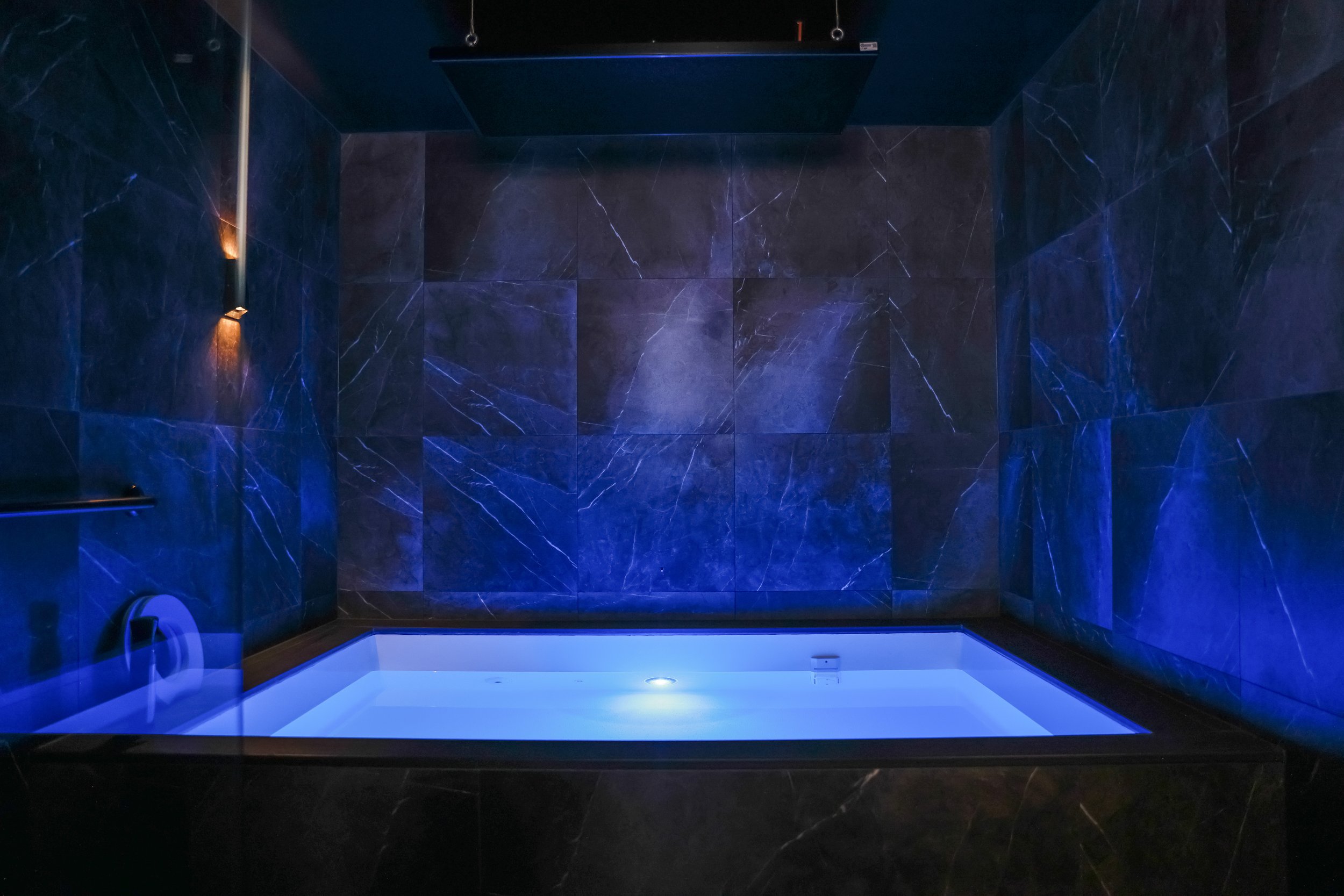
At City Cave, this takes place in your own private suite with a float pool.
Inside the float room, sensory input is intentionally reduced:
Minimal light
Minimal sound
Minimal gravity
Minimal external distraction
This sensory reduction allows the brain to step away from its usual constant monitoring and problem-solving mode.
Research into flotation therapy has explored its potential effects on:
Stress levels
Relaxation
Mood and wellbeing
Because stress and cognitive overload can contribute to poor sleep, creating space for deep relaxation may support better sleep patterns over time for some people.
Why Combining Sauna and Float Can Be a Powerful Wind-Down Ritual
While both experiences can be enjoyed individually, many people like combining them as part of a wind-down routine.
At City Cave, this combination is known as the Flauna Experience.
The sequence typically works like this:
Sauna prepares the body
Heat therapy may help:
Release muscle tension
Encourage circulation
Promote physical relaxation
Float reduces stimulation
Float therapy helps create an environment with:
Minimal sensory input
Reduced external distraction
Time for mental stillness
Together, the experience helps create a transition from high stimulation toward deeper relaxation, which many people find helpful when preparing for sleep.
How Often Should You Sauna or Float for Sleep?
A common question we hear is:
“How often should I do sauna or float therapy if I’m trying to support better sleep?”
At this stage, there isn’t a single scientific protocol that defines how frequently these therapies should be used specifically for sleep.
However, research into flotation-REST often involves multiple sessions over several weeks, suggesting that consistency may play a role in how people experience the benefits.
After more than 10 years of working with communities across Australia, our teams have observed a consistent pattern.
Many people exploring these experiences for relaxation and recovery begin with:
2–3 initial Flauna sessions
Followed by:
Around one session per month for ongoing maintenance
This approach is based on observations from our teams and client feedback rather than formal clinical guidelines.
As with many recovery practices, consistency may be more helpful than occasional sessions.
Turning Recovery Into a Sleep Ritual
If you’re using sauna and float therapy as part of your wind-down routine, timing can help maximise the experience.
Many people find it helpful to:
Book sessions in the evening
Allow 1–2 hours before bedtime
Keep lighting soft afterwards
Reduce screen time
These cues can support the body’s natural circadian rhythm and make it easier for the nervous system to continue transitioning toward rest.
If you’re new to floating, our first-time float guide (internal link) explains what to expect from your first session.
Sleep Is a Nervous System Skill
Sleep isn’t something we force.
It’s something the body allows when the conditions are right.
Reducing stimulation, calming the mind and relaxing the body can all support that process.
While research continues to explore the relationship between float therapy, sauna and sleep, many people find that regular recovery experiences help them unwind and transition more easily into rest.
And in a world where the brain rarely gets a break, creating intentional spaces for recovery may be one of the most valuable things we can do for our wellbeing.
If your mind struggles to switch off at night, exploring recovery experiences designed to calm the nervous system — like the Flauna Experience at City Cave — could be a natural place to start.
